
 Agroaldea
THE DATA IS COLLECTED IN A STUDY CARRIED OUT BY THE MARM.
The “Report on the organoleptic and sensory assessment of organic products” was commissioned by the Ministry of the Environment, Rural and Marine Environment, in order to evaluate the characteristics of these foods.
From the conclusions of the study it is deduced that organic products, and in particular the tomato, They have passed the test once again, which encourages producers in this sector to continue betting on improving.
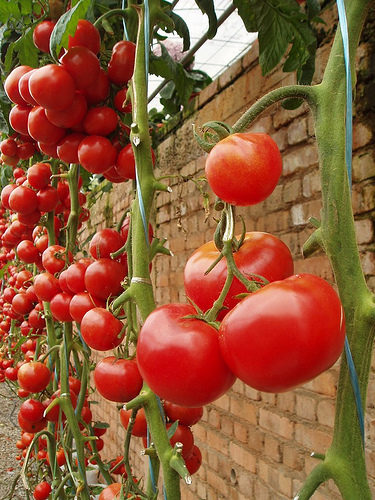
The organic tomato analyzed for the study obtained a score of 71,2 points about 100 and a qualitative category of good to very good. The experts pointed out that the organic tomato presents quite homogeneous qualitative characteristics.
 Like this, highlight the “very good visual presentation, a good degree of color uniformity, shape, calibre, maturation and good aromatic intensity”. In addition, “the appearance is clean and has great acid/sweet power”.
Another data provided by the study is that “The organic tomato has a thin skin, pleasant persistence, a meaty texture and excellent juiciness”.
As the most relevant information regarding to conventional tomato, The study concludes that organic tomatoes are very rich in vitamin C and lycopene and poor in potassium..
For all these reasons, Experts advise the organic tomato producer to make a presentation appropriate to its good quality.. In this way, suggest that conservation processes oscillate between 8 and the 10 degrees.
Organic tomatoes are increasing market share at an important rate. The European consumer, increasingly demanding, opt for organic production.
In this sense, the European Commission sets the guidelines in the new reform of the CAP. Productions must tend to the sustainability of the environment and the application of techniques that favor the ecological nature of the products..
In addition, This study confirms the excellent quality of wines, oils, fruits, vegetables, eggs, breads and meats, who obtained scores well above 60 about 100.