 Agroaldea
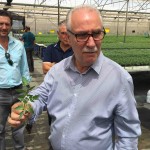
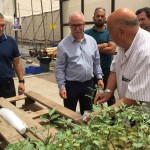
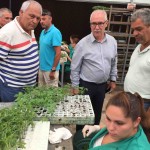
 Miguel Hidalgo was able to learn about the grafting activity carried out in the seedbed.
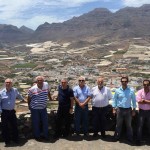
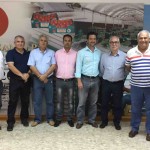
The Minister of Food Sovereignty and Primary Sector of the Cabildo of Gran Canaria, Miguel Hidalgo, the general director of Agriculture, Livestock and fisheries, Sebastian Nuez, accompanied by advisor Pedro Suárez, They visited part of the facilities of the COAGRISAN Cooperative.
President of COAGRISAN, Juan José del Pino, the Vice President, Rogelio Rodríguez and the general director, Jacinto Godoy, They received the delegation at the headquarters of the Cooperative.
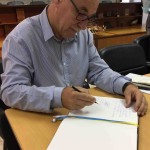
Del Pino presented them with an information dossier that includes the most important milestones of COAGRISAN., while the general director explained the history of the entity.
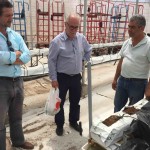
 Accompanied by the technical team, they toured the seedbed facilities, in which they were able to observe the grafting activity carried out by about a hundred women, as well as the transfer of the plant before reaching the crop.
The island councilor expressed his surprise at the high 'almost scientific' level of this activity and the exceptional aseptic conditions in which it is carried out..
Hidalgo was pleasantly surprised by the professionalism and high qualification with which COAGRISAN develops its activity, adding that this sector cannot disappear.
Del Pino conveyed to the counselor and the island director the problem that directly affects the Cooperative and that hinders the development of the activity., in a predominantly agricultural town.
The president referred, mainly, to the problem of waste evacuation to the Juan Grande plant and the 'unbearable' slowness of the resolution of territorial qualifications.
On the other hand, The counselor committed to addressing both issues with those directly responsible for the affected areas.. Hidalgo stated that with this procedure it is very difficult to develop the activity, above all, when what you want is to comply with current regulations.
After the visit to the seedbed, The delegation moved to the agricultural urbanization of Las Tabladas, in which they verified the development of some plantations and how the project of this urbanization was carried out, unique of its kind in the Canary Islands.