
 Agroaldea
THE MULTINATIONAL BASF HAS BEEN THE LAST COMPANY TO TRANSFER RESEARCH TO THE AMERICAN CONTINENT.
In 2004 the Swiss Syngenta made a similar decision. Like Monsanto, Dow and Dupont also do not maintain their research centers in Europe, after BASF's decision, Among the large firms in the sector, only Bayer has centers in the EU.
Europe is not a continent for GMOs. The social and political rejection that has occurred in many countries has left the EU far behind in this area.. And the announcement that the German multinational BASF will transfer most of its research on transgenics to the United States and South America., seems to be the last symptom of the victory of environmentalists and consumer groups in this tough fight.
The German chemical giant BASF justifies its decision in the low demand for these products in Europe. According to the portal oz Julia Meder, The multinational will continue its genetic research on the American continent. BASF closes its three genetic laboratories with a consequent reduction in staff and moves its biotechnology headquarters from Limburgerhof (Rhineland) a Raleigh (North Carolina).
Genetically modified products “do not find sufficient acceptance in Europe” to justify investments. Spain only, dice, “it is apparently an exception”. But overall “the European market is too reticent” for it to be profitable.
On the other hand, Carel du Marchie Sarvaas, Director of Biotechnology of Europa Bio, sector business association, considers the situation to be disastrous: “we are talking about jobs for doctorates, well paid, and European companies take them to the US. It is the typical question that should make people think”.
BASF has not offered figures on the canceled investments, but he assures that he has investigated more than 1.000 million euros in the last 15 years.
The power of the consumer.
The difficulties of implementation in Europe are not due so much to legal restrictions for research and cultivation as to consumer rejection.. A Eurobarometer of 2010, with 16.000 surveys confirmed an increase in rejection of GMOs: had risen from 57% of 2005 up to the 61%. While, support fell from 27% to the 23% (in Spain of 66% in 1996 to the 35%). “Unlike industry and scientists, "Europeans consider genetically modified organisms to be unprofitable and unsafe.", concluded du Marchie.
That, despite the fact that in the almost two decades of use of GMOs until the World Health Organization (WHO) has guaranteed its safety. Back then, only six countries were growing GMOs.: Spain (leader in borer resistant corn), the Czech Republic, Portugal, Rumania, Poland and Slovakia. In Europe there were only a few 100.000 hectares, compared to 134 millions in the world.
The situation is such that France, Germany, Hungary, Greece, Austria, Luxembourg and Bulgaria have banned cultivated corn 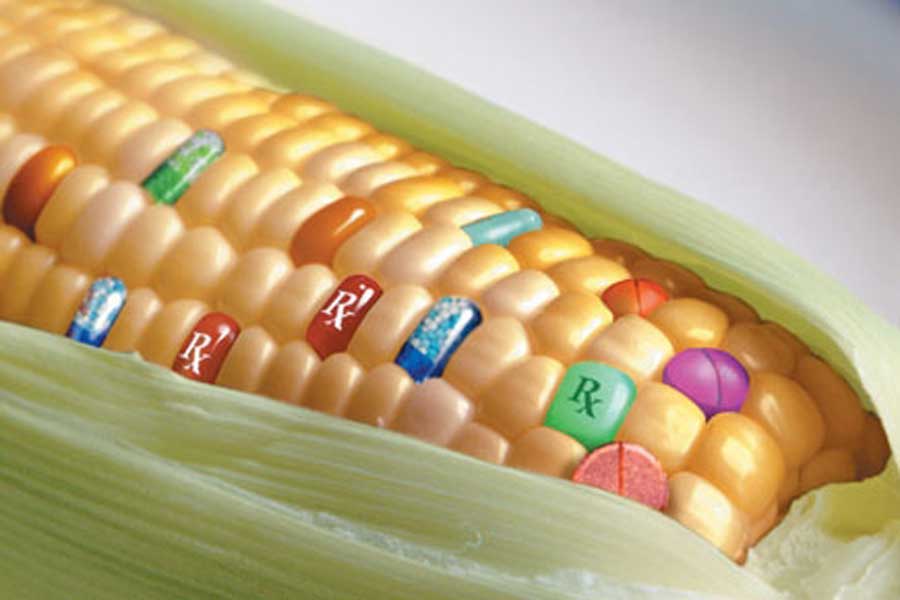 in Spain. And there are others like Austria that systematically vote against the opinion of the European Food Safety Agency. In the US and developing countries, instead, there is much less debate.
Carlos Vicente, Monsanto Biotechnology Director for Spain, affirms that the European stoppage will not affect world development: “Very important countries in the production of agricultural raw materials, like canada, IN THE, Brazil, Argentina, China or India, for example, “They continue to advance in the development of agricultural biotechnology”.
BASF achieved in 2010 the cultivation license for a transgenic potato. It is genetically modified (the firm calls it “improved”) so that it contains more industrial starch than a normal potato. This sparked a wave of protests in Germany..
The potato “Amflora” It has been grown legally in an eastern state of the country. The regional government ordered its confiscation when it became known that other types of modified potatoes that lacked a license had been grown among Amflora in Sweden.. BASF does not directly market agricultural products, but collaborates with companies like Monsanto or Bayer. With them he develops the modified seeds, that reach the market through these partners.
BASF's withdrawal from the continent sparked a political debate in Germany. The DFDP liberals lamented the “loss for scientific development”. Politics “has not known how to stop a current of anti-scientific thought that is alien to reality”, found in flour-based foods. Green MPs, instead, They assured that BASF's decision was merely due to the “commercial fiasco” of its agricultural products..
Environmentalists hailed the announcement as a triumph.: “BASF's decision is a warning to firms like Monsanto, Syngenta or Bayer, who continue to pressure to introduce transgenic crops in Europe. The example of BASF shows that forcing the will of consumers and the vast majority of farmers, It is not even economically profitable.”, Friends of the Earth said in a statement.
CSIC Research Professor Pere Puigdomènech believes that BASF's withdrawal “can be seen as an environmental victory or as a loss for Europe.”, because biotechnology applied to food is not going to stop. Brazil, for example, has made a transgenic bean and the US is now debating the approval of alfalfa”. Puigdomenech highlights another aspect, that by losing the investigation, the EU also loses control: “Millions of tons of grain are imported
transgenic but we will not be able to control if it is produced by others and we do not have the technology”.