 Agroaldea
 IN THIS SENSE THE MINISTER INDICATED THAT “NOT ONE MORE TOMATO WILL ENTER THAN AGREED”.
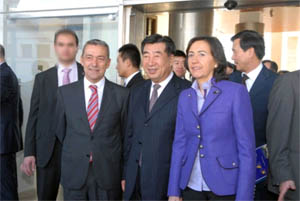
During the event held yesterday in the port of La Luz and Las Palmas in which the Vice Prime Minister of China and the Minister of MARM were present, The latter guaranteed that exhaustive control and monitoring will be carried out, permanent and continuous EU agreement – Morocco.
Rosa Aguilar declared that from the MARM “We send a letter to the -European- commissioner, We revealed the data we had in the Ministry of arrival of tomatoes and asked the EU to act, how could it not be otherwise, looking after Spanish interests within the framework of Europe”, He said.
Like this, before the new EU agreement with Morocco, Aguilar stressed that it was closed in 2009 although it will be formally signed in 2010, currently awaiting its passage through the European Parliament for approval. He also emphasized that if it is approved and given the green light, The Ministry has a commitment to agricultural organizations to carry out permanent and continuous control and monitoring of said agreement..
“We are not going to let in even one more tomato than what corresponds to the agreement signed by the EU and Morocco, that transcends the fact of agriculture and, for this reason, It has been signed by the foreign ministers. No one is unaware of the EU's relationship with Morocco in other matters beyond agriculture: in the field of security or the fight against terrorism. I.e., There are many elements that define this relationship”, stated the Minister.
In this sense, Aguilar reiterated that Spain will monitor the entry of Moroccan tomatoes into the EU and pointed out that agricultural organizations will have permanent information, being able to verify that the Government of Spain “properly controls” border ports and “There will not be more tomatoes coming in than the agreement foresees, if it is finally approved.
On the other hand, The minister recalled that it is foreseen in the budgets of 2011 a greenhouse plan, that will modernize and improve the conditions of Spanish greenhouses, making them more competitive, while he opted to take advantage of the liberalization of tariffs on some products so that Spanish products can also reach Morocco..
Regarding the Canarian banana, explained that the negotiations “they are going relatively well”, although he indicated that the first thing to do is close the aid that this fruit must have “as a result of the elimination of tariffs”.