 Agroaldea
 YOUNG PEOPLE WILL RECEIVE PUBLIC SUPPORT DURING THE FIRST FIVE YEARS OF THEIR INCORPORATION.
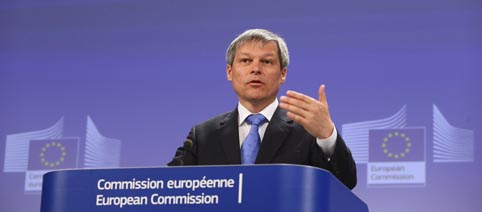
The Commissioner for Agriculture and Rural Development of the European Union (EU), Dacian Ciolos, has defended that the new reform of the Common Agricultural Policy (PAC) makes a distribution “fairer” of the aid, promotes quality and environmental care, and adapts to the Spanish agricultural reality.
Ciolos himself has highlighted that Member States and regions will have flexibility to apply the distribution of aid and thus adapt it to the “local specificities”, and market management tools and rapid response to crises such as those that have affected milk in the past will also be recovered., Fruits and vegetables.
Ciolos has reminded that, in sectors such as oil, beef cattle, milk, the cereals, wine or sugar, producer or interprofessional organizations can act to face crises - in reference to the possibility of withdrawing production from the market- and only if there is “serious market dysfunctions” public authorities would intervene.
Professional or interprofessional organizations may therefore limit the volumes that reach the market under certain conditions to prevent their income from being affected or a decrease in quality following a drop in prices., She added, to which he added the measures to rebalance the food chain through the “contractualization” mandatory.
As highlighted, the new CAP will make a “positive discrimination” of the young, that will receive public support during the first five years of their incorporation into the activity - with a 25 % of aid per additional hectare to the rest of the producers-, and coupled aid is included for specific productions.
Regarding internal convergence, advocates for greater “Justice” in the distribution of aid, with a system that tends to lower payments for large farms and raise them for smaller ones.
On the consideration of “active farmer”, The commissioner has stressed that a “minimal agricultural activity”.
The EU will dedicate the 2 % of aid linked to promoting protein crops to reduce dependence on imports of vegetable proteins, on which part of European animal nutrition depends, according to Ciolos.
He has also highlighted the measures of “greening” of the new CAP, which will require that the 30 % of direct payments is linked to practices beneficial to the environment and, in the same percentage, for agri-environmental and organic farming measures included in the framework of rural development programs.
Regarding the new regime of authorizations for planting vineyards (2016-2030), The commissioner has considered that it will end the “rigidity” current and will allow us to better respond to market demands in the face of export dynamism, while “will preserve” the specificity and quality of the territories.
At a meeting in Madrid, Senior officials of the European Commission have stressed that the CAP will help promote economic growth and address challenges such as food security, climate change, job creation and the structuring of the rural environment.
Among the new features of this CAP “more effective and more transparent”, have highlighted that the resources intended to support research will be doubled, innovation and knowledge sharing; A simplified aid scheme for small farmers will be promoted and all aid will be made public, except for very small amounts.
Those who appear on a negative list of the Commission - such as airports or golf courses - will no longer be able to be recipients., but the States may expand at their discretion, have added.