 Agroaldea
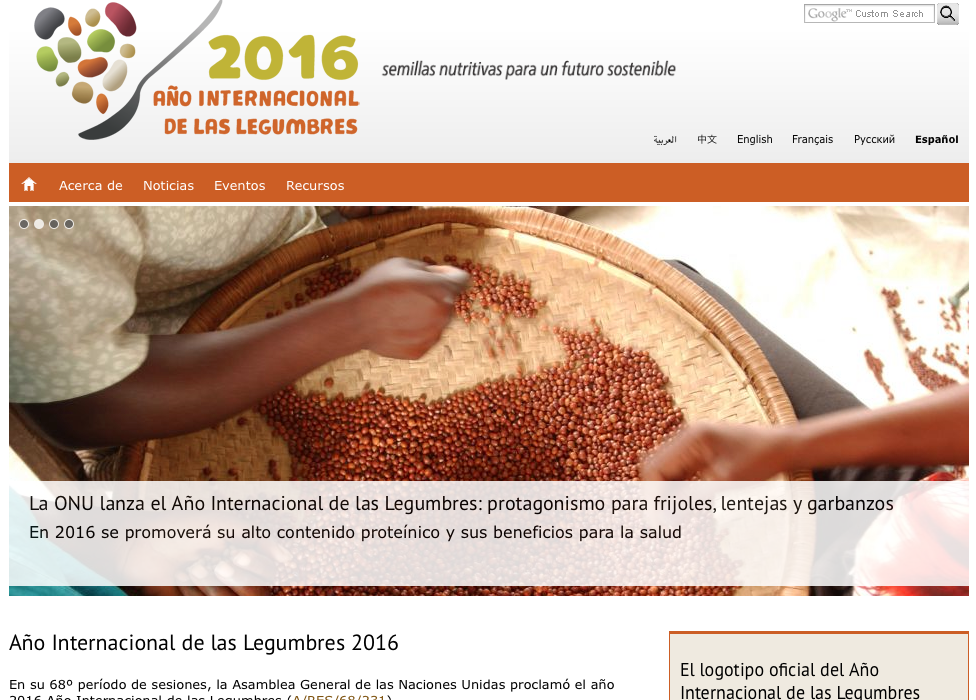 The protagonism for beans, lentils and chick peas.
In 2016 se promoverá su alto contenido proteínico y sus beneficios para la salud. Las legumbres -incluyendo todo tipo de frijoles y guisantes secos- son una fuente barata, deliciosa y muy nutritiva de proteínas vitales y micronutrientes que pueden ser muy beneficiosos para la salud y el sustento de las personas, en particular en los países en desarrollo: este ha sido el mensaje de la ONU al presentar el International Year of Pulses 2016.
“Las legumbres son cultivos alimentarios importantes para la seguridad alimentaria de buena parte de la población, sobre todo en América Latina, África y Asia, donde las legumbres forman parte de las dietas tradicionales y a menudo son cultivadas por pequeños campesinos”, noted the Director General of FAO, José Graziano da Silva.
“Han sido parte esencial de la alimentación humana desde hace siglos –añadió-, y sin embargo, Their nutritional value is generally not recognized and they are often undervalued.”.
Under the motto “nutritious seeds for a sustainable future”, The UN General Assembly declared 2016 as International Year of Legumes, to raise awareness of its many benefits, promote its production and trade, and encourage new and smarter uses throughout the food chain .
In a symbolic gesture after his intervention, FAO Director-General planted broad bean seeds in a pot with soil, declaring the International Year inaugurated.
Untapped potential
Legumes are part of the food culture and basic diet in many regions of the world and are a key ingredient in many traditional national and regional dishes., like falafel, dahl and cooked beans.
 There are hundreds of varieties of legumes grown around the world.. Among the most popular are all varieties of dried beans, like beans, lima beans and kidney beans. But there are also chickpeas, cauliflower, black-eyed peas and pigeon peas (more information at: What are legumes?).
They are an affordable alternative to proteins of animal origin – with a higher cost- and therefore ideal for improving the diet in the poorest areas of the world. Protein from milk, for example, It is five times more expensive than that obtained from legumes.
Because legumes reach prices that are double or triple those of cereals, have great potential to lift farmers out of rural poverty, and its processing opens additional economic opportunities, especially for women.
Health benefits
Although small, the legumes están repletas de proteínas: twice those found in wheat and three times those found in rice.
They are also rich in micronutrients, amino acids and group B vitamins, which, as highlighted today by the Director General of the FAO, They are key elements of a healthy diet.
Low in fat and rich in nutrients and soluble fiber, the legumes They are also excellent for controlling cholesterol and digestive health., and their high iron and zinc content makes them a powerful food to combat anemia in women and children.. They are a key ingredient in healthy diets to combat obesity and prevent and manage chronic diseases such as diabetes., coronary heart disease and cancer.
Due to its high nutritional content, Legumes are a basic food in emergency food aid and do not contain gluten., They are also suitable for celiac patients.
Benefits for animals and the environment
But legumes not only benefit human health.: They also improve livestock performance and promote healthy soils and biodiversity..
Los residuos de los cultivos de legumbres pueden usarse como forraje para aumentar la concentración de nitrógeno en la dieta, mejorando la salud y el crecimiento de los animales.
Graziano da Silva subrayó en particular cómo las propiedades fijadoras de nitrógeno de las legumbres pueden mejorar la fertilidad del suelo, lo que incrementa a su vez la productividad de las tierras agrícolas, y elimina la dependencia de los fertilizantes sintéticos. Ello conduce a una menor huella de carbono e indirectamente, a menores emisiones de gases de efecto invernadero.
It's more, al mejorar la salud general del suelo, las legumbres promueven la biodiversidad subterránea, creando un entorno adecuado para gérmenes, insectos y bacterias de diversos tipos.
Debido a que las legumbres -como grupo-, They are very genetically varied, They also have great potential for adaptation to climate change, as they allow farmers to select new varieties and adjust their production to changing climatic conditions.
Finally, use as a cover crop and in intercropping systems – planting legumes among other crops or within a rotation system- can help reduce soil erosion and combat pests and diseases.
The co-chairs of the Steering Committee of the International Year of Pulses, Aydin Adnan Sezgin and Nadeem Riyaz, Permanent Representatives of Türkiye and Pakistan to FAO, gave speeches at the beginning and closing of today's ceremony, which also included a presentation by Mahmoud Soul, Director General of the International Center for Agricultural Research in Dry Zones (ICARDA).